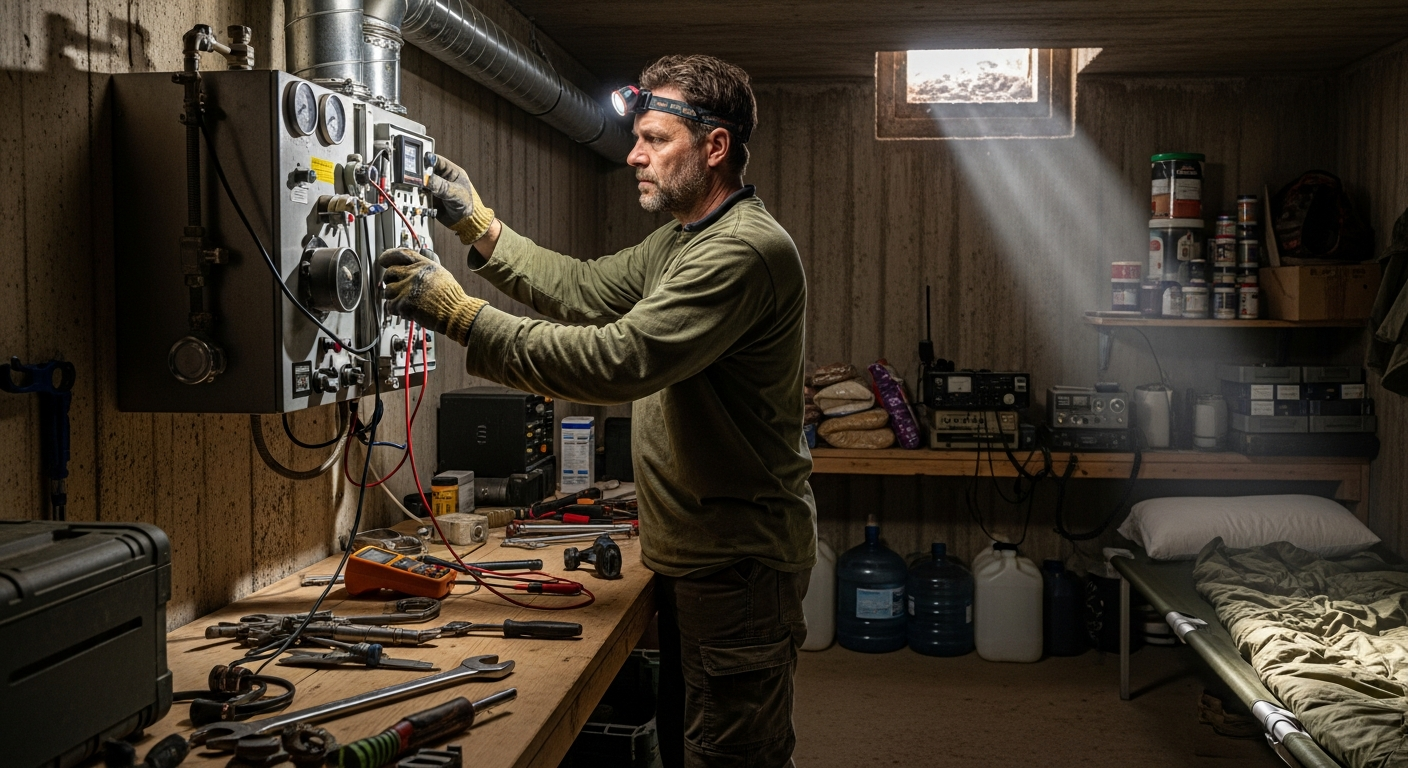
The Essential Guide to Bunker Ventilation, Air Filtration & Life Support for San Diego Homeowners
For any survival bunker or underground shelter San Diego project, breathable air is the priority. Proper bunker ventilation San Diego planning protects against smoke, dust, heat, humidity, and carbon dioxide buildup—key for San Diego bunker safety during wildfires, earthquakes (earthquake shelter California), and coastal storms (storm shelter California, storm shelter San Diego). Whether you want a safe room San Diego, blast shelter, or luxury bunker, air handling defines comfort and survival.
What systems you need
- Bunker ventilation systems: intake/exhaust, backdraft dampers, sealed penetrations, and quiet fans for home bunker ventilation.
- Air filtration systems for bunkers: pre-filters + HEPA for particulates and activated carbon for smoke/chemicals—advanced air filtration for bunkers and bunker air purification.
- Life support systems for bunkers: CO2 monitoring, oxygen management, overpressure capability, and emergency air systems for bunkers.
Build considerations in Southern California
Good bunker air quality depends on site soils, wildfire exposure, and code-driven egress. Professional bunker builders San Diego typically integrate filtration with secure shelter solutions San Diego, power redundancy, and moisture control during underground shelter construction and residential bunker construction.
Costs & timeline
Underground bunker cost varies with depth, occupancy, and high-tech bunker systems. For most safe room installation or custom underground shelter San Diego builds, ventilation solutions for bunkers and air filtration for underground shelters are a defined line item, often installed during the final 2–6 weeks of survival bunker construction after concrete cure and utility rough-in. Ask San Diego underground shelter experts to size systems for occupancy, sealed mode duration, and maintenance.
Contact Bunker Builders at bunker-builders.com to get your free consultation and protect what matters most.